Showing posts with label Spanish Nobility. Show all posts

Thursday, 27 September 2012

A Title Reborn

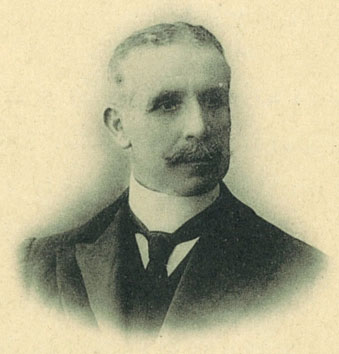
This week I was pleased to read that the Duchess of Medinaceli has agreed to cede one of her titles, that of Count of San Martin de Hoyos, to one of her grandsons, Luis Medina, who hitherto held no title. I have no personal interest in this matter, but had expressed a general view earlier this year in this blog that when one person accumulates some considerable number of titles, the lesser-known titles cease to serve at least one of their purposes: keeping alive the memory of the accomplishments of their first grantee. When any given title is, in a sense, buried under better-known ones, it becomes very much like a portrait of an ancestor left to gather dust in an attic. I even expressed the opinion that where a Grandee unites several titles in their person, the Crown should encourage them to distribute them among their closest relations - siblings and children - so that the more obscure ones should not fall into total disuse.

The 1st Count of San Martín de Hoyos (1852-1914)

It appeals to my sense of justice to see at least one instance of this being done, and as to whether or not it works, well, the proof is in the pudding. Even though my career brings me into frequent contact with books and articles referring to members of the Spanish peerage, I confess that I had been completely unaware that there ever was such a person as a Count of San Martín de Hoyos. Now I know.

Monday, 9 July 2012

El Contencioso del Ducado de Fernandina, y el Reparto de los Títulos

Hoy quiero hablar de nobiliaria. Cierto titular, leído hace unos días, me ha dado de qué pensar: la noticia de que, por ciertas desavenencias familiares, la Duquesa de Fernandina había sido despojada de su titulo por el Ministerio de Justicia.

COA Dukedom of Medina Sidonia No tengo el placer de conocer a ninguna de las partes en esta causa, pero el tema invita a una reflexión en torno a la manera en que los títulos se reparten en las grandes casas. Según entiendo, el Duque de Medina Sidonia dispone de al menos otros dos títulos que pudiera repartir a su hijo, por lo que llama la atención que precise quitarle a su hermana el que lleve ella; así como el hecho de que el hermano menor de ambos no haya recibido titulo alguno.

Mas allá de lo recogido por el Derecho Premial, yo siempre he pensado que un titulo que no se utiliza, que no esta en circulación, deja hasta cierto punto de cumplir con su función: se convierte en algo análogo a un retrato olvidado en un trastero. Porque entiendo que una de las funciones de un titulo debería ser mantener vivo el recuerdo de quien lo recibió: que quien hoy lo ostente sea recordatorio viviente de que hubo alguna vez un Conde de X que ganó una batalla/tomó una fortaleza/prestó dineros al Rey, o un Duque de Z que capturó una ciudadela/repeló invasores/fue el espadón de un pronunciamiento.

En algunas casas, títulos que alguna vez fueron gloria de sus linajes se amontonan, ocupan el 19º lugar por detrás de otros "mas relevantes", por los que es conocido quien los ostenta; y no "circulan" salvo si uno se toma la molestia de buscarlos en una guía de títulos y grandezas.

Es por ello - y en atención a casos como el que hoy nos ocupa - que yo creo que fuera positivo una reforma legislativa que fomentara que en casas nobles en los que actualmente recaen múltiples títulos - digamos, 3 o mas - se repartieran entre los familiares vivos y con derecho a ellos. Se podría incluso ofrecer algún aliciente económico sobre las tasas de sucesión para que resultara mas atractiva la propuesta. De esta manera, acaso se aminorarían las disputas entre familiares por llevar o no llevar uno de los títulos tradicionales de la casa: y a su vez se volverían a poner en circulación muchos títulos que hoy subyacen tan olvidados como quien los gano.

Se me dirá que la idea misma atenta contra la manera en que los títulos se heredan en las casas nobles. Sí, pero (como decimos en ingles) ese barco ya ha zarpado. Zarpó con la reforma del 2006, que modificó la tradicional preferencia por el varón en la herencia de los títulos. Para bien o para mal, con esa reforma - muy cuestionada en su día - se abrió la veda a alterar el orden milenario de estas cosas. Habiendo sido, pues, declarado el estamento susceptible a reformas, no tengo el menor reparo en proponer ésta mía, confiando plenamente en la falta total de interés que suscitará.


Monday, 5 March 2012

Enríquez de Castilla > Fernando Enríquez > Enríquez de Noboa

I am pleased to be able to share, in web format, a study I prepared of one of the several Enríquez de Noboa lineages in Galicia, which concludes by suggesting a new way to interpret certain evidence of the parentage of Fernando Enríquez, constable of the castle of Allariz at the outset of the 15th century.


Me complace poder compartir con quien quiera asomarse al tema este estudio que preparé en cuanto a uno de los linajes Enríquez de Noboa que alcanzó una cierta relevancia en Galicia durante el antiguo régimen, estudio que concluye proponiendo una forma novedosa de interpretar dos escritos contemporáneos en cuanto a la luz que arrojan sobre el padre de Fernando Enríquez, Tenente del castillo de Allariz al inicio del siglo XV.

[Arms/Escudo: Heralder [CC-BY-SA-3.0-2.5-2.0-1.0 (www.creativecommons.org/licenses/by-sa/3.0) or GFDL (www.gnu.org/copyleft/fdl.html)], via Wikimedia Commons]

Monday, 19 December 2011

Curiosidades Genealógicas (VII): La variopinta descendencia de Sebastián Benítez Milanés

Para de alguna forma conmemorar desde este blog el inminente cambio de inquilinos en el Palacio de la Moncloa, un breve apunte sobre la genealogía del futuro expresidente inmediato del gobierno.
Hay una frase Americana, 'Politics makes strange bedfellows', es decir, la política hace inusuales compañeros de lecho - una reflexión acerca de como el oportunismo y la conveniencia lleva a hacer causa común a quienes otrora fueron enemigos jurados.

Pues si esto hace la política, la genealogía ¡no veas! Y se descubren parentescos entre personas quienes, en teoría, mutuamente no se aguantarían. Algunos vínculos que uno descubre por casualidad, investigando otros temas, dejan a uno en silencioso asombro, cuando no carcajada reprimida.

Sebastián Benitez Milanés fue un humilde hidalgo extremeño nacido a finales del siglo XVII y si su existencia ha trascendido siquiera minimamente se debe a que figura en alguno de los tomos editados por el recordado Maestro Cadenas dedicados a extraer el contenido de los expedientes de la Orden de Carlos III.

Dos de sus hijas casaron con sendos caballeros extremeños, de familias antiguas y distinguidas, asentados en Guareña y pueblos vecinos, y acaso pervive la sangre de Sebastián hoy día entre hidalgos descendientes de estos matrimonios.

Pero, en mayor grado, ha pervivido desde 2004 en el Palacio de la Moncloa, porque a través de su hijo Nicolás, Sebastián Benítez Milanés era por tres vías distintas un antepasado paterno del todavía presidente del Gobierno:


Lo que acaso fuera menos llamativo si no fuera porque uno de estos parientes lejanos de ZexP ostentara cargos eclesiásticos tales como Fiscal de la Nunciatura y Capellán de Honor del Rey. Desde luego, en una reunión familiar en el más allá, saltarían chispas....

Tuesday, 15 November 2011

Duchy Original: The Palma Title At Home and Abroad

With the alleged financial peccadilloes of the Duke of Palma de Mallorca receiving so much media attention, perhaps it's a good time to consider whether or not there is any such person.

Of course, any number of references may be found on the internet and in print media to Iñaki Urdangarín as 'Duke of Palma de Mallorca'. These are only potentially accurate inasmuch as he may be considered - at most - Duke Consort: the Royal Decree bestowing the Palma title for life on the Infanta Cristina, daughter of King Juan Carlos (the official text of which may be seen at this link) makes no mention whatsoever of the person to whom she shall be married; the Decree only says that the title is bestowed with occasion of her wedding.  

In earlier times the consequences of this would have been straightforward enough, but in 1987 Spain enacted a piece of legislation of the same degree in law, a Royal Decree regulating the titles, honours and forms of address of the royal family. Under Article 6 it specifies that the use of titles vested in the Crown will be 'personal and for life'. Most interestingly, this article was followed by a Transitory Disposition stating that:

- King Juan Carlos' father would continue to hold the title of Count of Barcelona for life; and (most importantly to the present matter)
- King Juan Carlos' mother would continue to receive the same title and corresponding honours.

The very fact that this Royal Decree mentions the King's mother, and the status to be accorded her, appears to be a tacit admission by those who prepare such things for the King's signature that some explicit mention of the King's mother was necessary in order for her husband's rank and precedence to extend to her; otherwise, it would not do so.

No such mention of the Infanta Cristina's husband is made in the Royal Decree granting her the Palma ducal title, nor does the 1987 Royal Decree governing titles and forms of address for the Spanish Royal Family take up this issue with a view to future marriages.

Earlier Spanish jurisprudence had held that 'husbands and wives shall enjoy the honours of their consorts' (Article 64 of the Civil Code) but this was repealed in 1981, and the wording of the 1987 Royal Decree seems to constitute admission by the Royal household of the fact that the new situation also extended to the consorts of those bearing titles vested in the crown. A well-known Spanish expert in matters nobiliary, the Count of los Acevedos, discusses this topic on page 71 of his work 'Historia y régimen jurídico de los títulos nobiliarios' as it applies to other Spanish titles of nobility. Previously the late Juan Balansó, a prolific writer and expert on the Spanish Royal family, had expressed in his 1998 work 'Los Diamantes de la Corona' the opinion that the royal sons-in-law were not strictly speaking entitled to be referred to with the ducal titles.
Of course, the law is one thing and custom something else. A Google advanced search of the Spanish Monarchy's official web site uncovers numerous instances of Iñaki Urdangarín being referred to as Duke of Palma, even in remarks made by his wife the Infanta; but it is noteworthy that the official biographical page about him, on the same site, does *not* refer to him by the title. In Spain as elsewhere people are accustomed to considering a Count's husband a Countess, and a Duchess' husband - apparently - a Duke. In the end one gets the feeling that the title was probably granted to the Infanta more with a view to providing her husband with precedence he would not otherwise enjoy at events outside Spain, and that little importance was attached to whether or not it made him a Duke under current Spanish law. If one assumes that in most other countries, to the extent that titles are even used or recognised at all, consorts do still receive the styles and forms of address accorded to their spouses, then - ironically - it may be more correct in a legal sense for foreign media to refer to Mr Urdangarín as the Duke of Palma, than it is for Spanish media to refer to him as el Duque de Palma and by so doing to flout the Civil Code and a pair of Royal Decrees.